When the Map Changes: Adaptation After Brain Injury
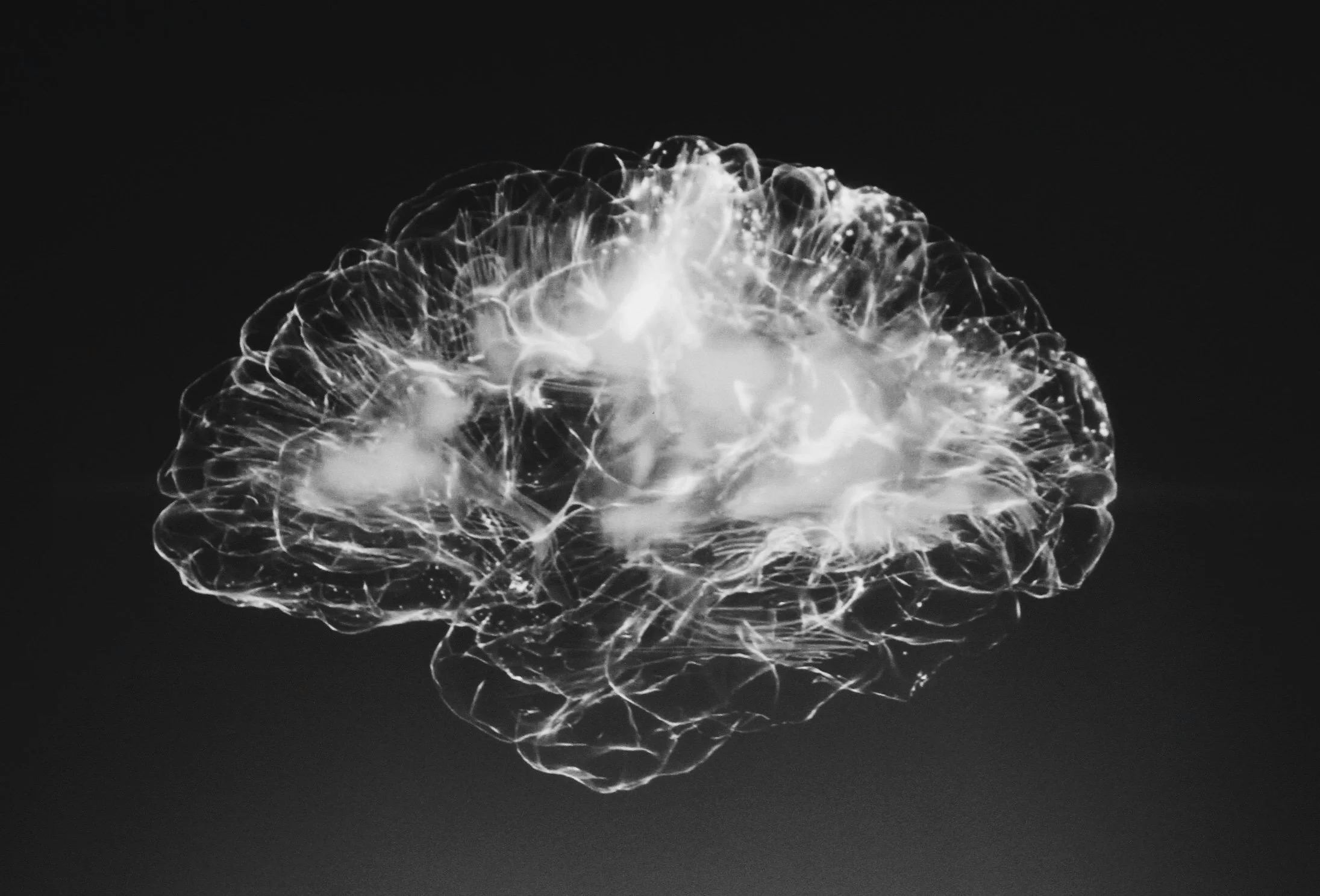
If I had to choose one word for my experience of brain injury, it would be adaptation.
Recovery was part of it, and in some ways still is. But recovery can carry an assumption that there is a known place to return to. A previous baseline. A familiar version of yourself waiting somewhere on the other side.
For a long time, that was what I wanted.
Before my injury, I understood health largely through what I could do. I was capable, active, productive, independent. If something was difficult, effort was usually a reasonable response. I knew how to work harder, learn more, solve the problem, keep going.
Then I sustained a traumatic brain injury, and that framework stopped working.
The difficult part was not simply that I felt unwell. It was that so many of the capacities I had relied on to navigate life became unreliable at once. Processing information took longer. Noise and movement could become overwhelming. Memory behaved strangely. Reading, conversation, driving, grocery stores, screens, heat, decision-making, and ordinary transitions between tasks could cost far more energy than they appeared to from the outside.
I often looked fine. That gap between appearance and capacity became its own kind of education.
When ordinary life becomes information
Before the injury, I rarely had to think about whether a grocery store was an environment my brain could tolerate. Afterward, fluorescent light, overlapping conversations, music, carts moving through peripheral vision, choosing between products, remembering why I had come, and getting myself home again could become one enormous neurological task.
There were days when a walk was significant. Reading a few pages was significant. Getting through a conversation without losing the thread was significant. None of those things looked especially remarkable from the outside.
I began to understand that capacity is contextual.
What I could do depended on how much sleep I had gotten, what else I had already done that day, how much sensory information was entering the system, whether I was hungry, whether I had driven somewhere, how long I had been concentrating, how much uncertainty was involved, and what the next few hours would require of me.
The question slowly changed from Can I make myself do this? to What will this cost, and what will still be available afterward?
A system can perform a function and still be spending more than it can sustainably replace.
Recovery was not a straight line
Brain injury is often described in milestones: return to work, return to exercise, drive again, read again, socialize again. I wanted many of those milestones desperately. But they did not tell the whole story.
I could technically do something and still pay for it hours later. I could have a surprisingly clear morning and mistake it for a permanent change. I could increase activity, feel capable for several days, and then discover that I had been borrowing from capacity I did not actually have.
Progress was not simply about adding more. It involved learning how much, when, under what conditions, and with what recovery afterward.
Some days the useful adaptation was expansion. Other days it was reducing input, changing plans, asking for help, shortening an activity, or recognizing that the version I had intended was not the version my brain could support that day.
That did not always feel like progress. Sometimes it felt maddening. Over time, feedback became more trustworthy than ambition.
The brain is a living system
My professional work in biomimicry gave me language for some of what I was experiencing. Biomimicry begins by looking closely at how living systems perform functions under real conditions. Not by asking nature for inspirational advice, but by studying response, relationship, constraint, feedback, resource use, and adaptation.
After my injury, those questions became personal. How does a system preserve function when resources are limited? How does it respond when conditions change faster than capacity can? What gets protected? Where does compensation occur? What information helps the system adjust? What supports recovery without requiring complete withdrawal from life?
Living systems are not infinitely adaptable. They have thresholds, tradeoffs, and constraints. They can compensate for a long time and still become depleted. But they are also not static.
The brain remains capable of change. Humans do not regenerate neural tissue in the ways some other species can, but our nervous systems still respond to use and experience. Practice, repetition, environment, rest, support, and novelty all enter the process. What becomes possible over time can be different from what is possible today.
I learned not to turn that into a promise.
Neuroplasticity does not guarantee complete recovery. Adaptation does not mean every loss is temporary. It does mean that the current state of a system is not necessarily the final one.
For me, that was enough to keep working with what was there.
Designing around capacity
Some of the most useful changes in my life were remarkably ordinary. I learned to notice sensory load earlier. I became more deliberate about how many demanding things I put next to one another. I used external supports for memory rather than repeatedly testing whether I should be able to remember. I became more aware of transitions: the space between driving and conversation, between work and rest, between one environment and another.
I paid attention to what helped symptoms settle and what consistently amplified them. I stopped treating every good day as permission to spend everything available.
None of this formed a perfect system. There were plenty of times when I misread the signals, pushed too far, became frustrated, or discovered that something I had learned six months earlier no longer applied.
That was part of the adaptation too. Conditions kept changing, so the design had to keep changing with them.
The goal was never to become perfectly regulated. It was to get better at hearing the signal before it had to become louder.
The strange work of identity
There was another kind of adaptation happening underneath the practical one. Brain injury disrupted my sense of who I was.
Abilities that had felt inseparable from identity suddenly required effort or disappeared for periods of time. Independence changed. Work changed. Relationships changed. The future I had been organizing around became less certain.
There was grief in that. Not because the person I had been was somehow better, but because she was familiar. I knew how to inhabit that life. I did not yet know how to inhabit this one.
For a while, I kept evaluating myself against the old map. Every comparison made the distance more visible.
Eventually, another question became useful: What helps me remain in relationship with myself as I change?
That question did not require me to celebrate the injury. I would not choose it again in order to receive whatever came from it. It simply allowed me to stop making return the only acceptable outcome.
Support changes what is possible
One of the things brain injury made impossible to ignore is how much individual capacity depends on relationships and environment.
The right person can reduce cognitive load simply by understanding that you need more time to answer. A clear plan can make an unfamiliar appointment easier to navigate. Someone else driving can preserve enough energy to participate once you arrive. A quiet room changes what conversation asks of the brain. Written instructions can carry information that working memory cannot reliably hold. A person who believes what you are describing means you do not also have to spend energy proving it.
These can look like accommodations around the “real” work of recovery. I no longer think of them that way. They are part of the system. Support is not separate from function. Conditions help determine function. That understanding has traveled far beyond brain injury for me.
What I understand differently now
I used to think resilience was primarily the capacity to withstand difficulty and return. I understand it differently now.
Sometimes resilience is recognizing the signal before it has to become pain. Sometimes it is preserving tomorrow's capacity instead of spending everything because today happens to feel good. Sometimes it is learning which alarms require action, investigation, care, or simply more information.
Sometimes it is building enough support that one body does not have to absorb every demand alone. Sometimes it is allowing adaptation without treating every change as evidence that we have abandoned who we were.
Brain injury made those distinctions impossible for me to ignore. It also made health much more relational.
Health became less about whether I could perform a particular version of normal and more about the relationship between my brain, body, environment, resources, relationships, demands, and changing conditions. That is a messier definition. It is also the one I can live inside.
If you are living inside a changed map
I hesitate to offer a path forward because brain injuries are different, bodies are different, circumstances are different, and the support available to one person may be inaccessible to another.
There are still a few questions I think are worth carrying.
What consistently costs more than it appears to?
What gives you useful information before a crash?
Which environments make function easier?
Where are you asking yourself to remember, tolerate, organize, or carry something that could be supported externally?
What becomes possible when you measure capacity not only by what you can accomplish in the moment, but by what remains available afterward?
Where might you need more information rather than more effort?
These questions will not diagnose anything. They do not replace appropriate medical, rehabilitation, psychological, or other professional care. They can help us notice the system we are actually living inside.
My brain injury changed the trajectory of my life. It influenced the way I understand health, resilience, movement, support, identity, and eventually much of the work that became Heal with Amore and The Resilient Living Systems Playbook.
Years later, adaptation still feels like the right word. Not because I became some improved version of myself. Not because everything returned. And certainly not because the injury needed to happen.
Adaptation means I learned to remain in relationship with a life whose conditions had changed.
Some capacities returned. Some changed shape. Some required different supports. New ones developed slowly enough that I did not notice them until they were already part of me.
The map changed. Eventually, I learned that I could change with it.
This story reflects my lived experience and is offered for education and reflection. Brain injuries can require specialized medical and rehabilitation care. New, persistent, or worsening neurological symptoms should be evaluated by an appropriately qualified healthcare professional.