Adaptive Design: What Living Systems Teach Us About Recovery After Disruption
What living systems can teach us about repair, feedback, boundaries, and adapting when returning to what was is no longer the only path forward.
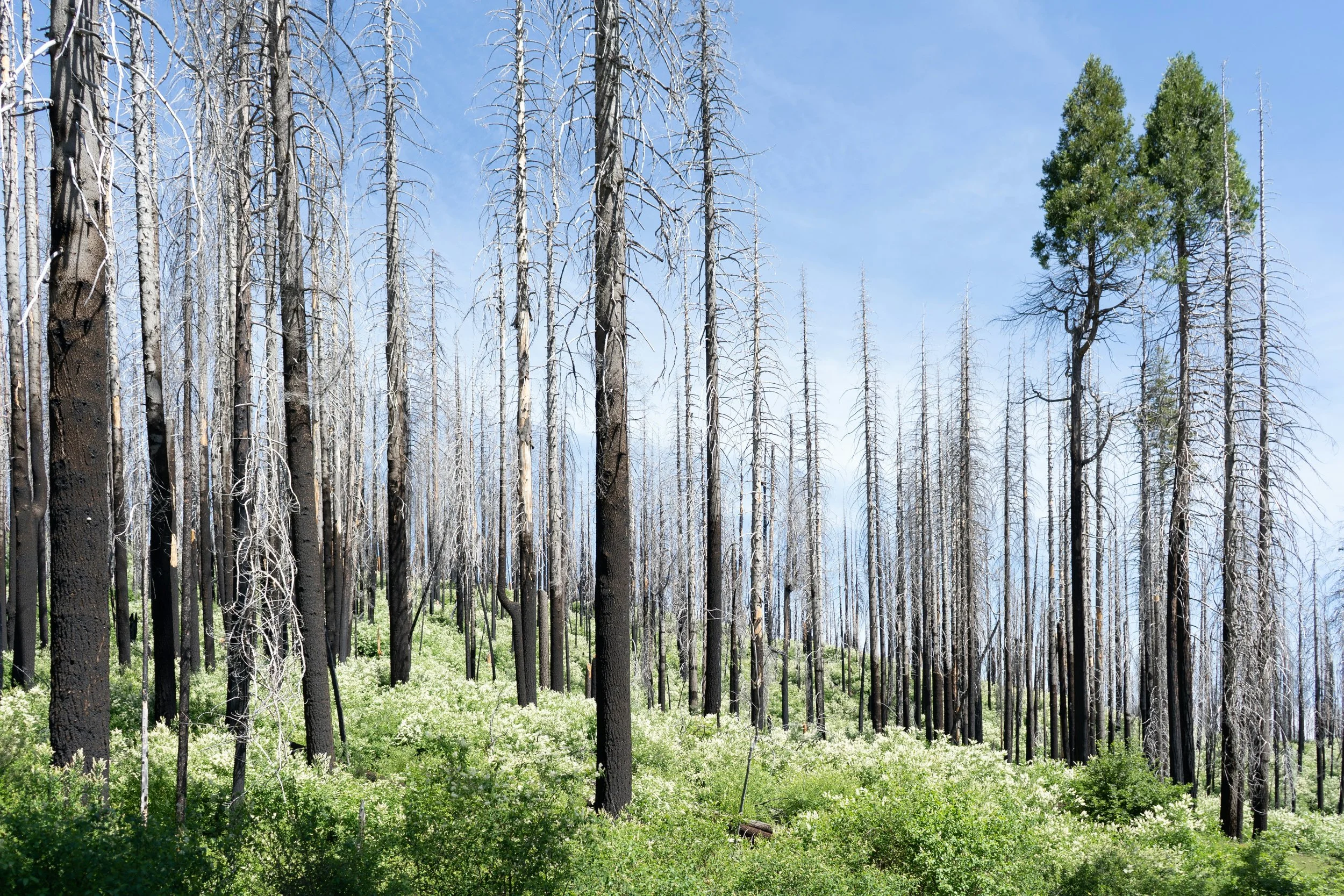
We talk about recovery with a surprising amount of backward-looking language. We want to get back to normal. Return to baseline. Feel like ourselves again. Regain what was lost.
Sometimes that is exactly what healing allows. Strength returns. Sleep settles. Tissue repairs. A familiar rhythm becomes possible again. There can be enormous relief in recognizing yourself in your own life.
But sometimes something has actually changed.
The body has changed. The relationship has changed. Our capacity has changed. The conditions around us have changed. We may know something now that we did not know before.
In those moments, returning to the exact shape of life before the disruption may no longer be possible. It may not even be the most useful measure of recovery.
Living systems offer another possibility.
They adapt.
Repair does not always mean reversal
While writing The Resilient Living Systems Playbook, I kept returning to the many ways living systems repair.
Some are extraordinary. Axolotls can regenerate limbs. Planaria can rebuild astonishing amounts of themselves from surviving tissue. Ecosystems recover from disturbance through processes that unfold across species, soil, water, climate, time, and whatever remains after the disruption.
We cannot borrow those capacities literally, and biology becomes much less useful when we turn it too quickly into metaphor.
What interests me is the function underneath them.
Repair requires resources. When something has been damaged or strained, energy has to go somewhere. Tissue needs rebuilding. Networks may need reconnecting. Signals have to be received and responded to. A system that has been operating under sustained demand may need to redirect capacity toward maintenance before it can support something new.
This is easy enough to accept when looking at another organism.
We are often less generous with ourselves.
We want to recover without losing momentum. We want to grieve without changing our schedule. We want the body to heal while continuing to meet the same demands that existed before it was injured. We may interpret reduced capacity as evidence of failure even when the system is already doing enormous work to compensate, protect, and repair.
Living systems do not respond to the conditions we wish were present. They respond to the conditions that are here.
When the old blueprint no longer fits
The metaphor of the body as a machine has its uses. If a machine breaks, successful repair often looks like restoring the damaged part and returning the machine to its previous function.
Living systems are different. They are sensing and responding all the time. They compensate. Remodel. Redistribute effort. Strengthen some pathways while relying less on others. Relationships change. Resources move. Functions that once happened one way may eventually be supported another way.
That does not mean every adaptation is helpful or sustainable. Compensation can become costly. A protective response can outlive the conditions that first called for it. A system can keep functioning while spending far more resources than it can replenish.
But it does mean that recovery is not always a matter of recreating an earlier version of ourselves.
Sometimes the more useful question becomes: What does this system need in order to function well under the conditions that exist now?
There is room in that question for restoration. There is also room for change.
Feedback changes the design
One of the things I value most about living systems is that they make certainty less necessary.
Life does not wait for a perfect plan before responding. Systems sense what is happening, make adjustments, receive new information, and adjust again.
Human change is often structured differently. We make the plan, follow the protocol, and then decide whether we succeeded according to how closely reality followed what we predicted.
A living-systems approach asks us to stay in the conversation.
We try something and notice what happens. We pay attention to whether it creates capacity or quietly consumes more of it. We notice what becomes easier, what becomes harder, what the body communicates, and what the surrounding environment makes possible.
Sometimes the practice works but the timing does not. Sometimes the idea is sound but the dose is wrong. Sometimes something that helped six months ago no longer fits the life we are living now.
That information is not an interruption to the process. It is the process. Feedback allows the design to change while we are inside it.
Adaptation still needs boundaries
Mangroves became one of my favorite living models while developing the Playbook because they exist at a boundary that is continually being rearranged. Land meets sea. Freshwater and saltwater mix. Tides move in and out. Storms reshape the coastline.
Mangroves survive through a combination of filtering, anchoring, and flexibility. Their success does not come from resisting everything that reaches them, nor from allowing everything through.
There is discernment at the boundary. That matters because resilience can easily become confused with greater tolerance.
We admire the person who can handle more, carry more, remain unaffected, keep producing, or adapt to increasingly difficult conditions.
But endless tolerance is not resilience.
A living system has to distinguish between what it can absorb, what needs to be filtered, when flexibility is useful, and what would begin to compromise the integrity of the whole.
Sometimes greater capacity is the right goal. Sometimes the adaptive response is a boundary.
Sometimes the conditions are the intervention
Beavers offer another kind of strategy. A beaver does not become stronger so it can tolerate a faster current forever. It changes the movement of the water.
A dam slows flow, retains resources, creates refuge, and changes conditions throughout the surrounding ecosystem. The organism changes its environment, and that altered environment changes what becomes possible for many other forms of life.
I think about this often in human health. So much attention goes toward increasing individual capacity without asking enough about the conditions consuming it.
There are times when building capacity is exactly what we need. Strength training can make us stronger. Practice can improve skill. Repetition can create familiarity. Appropriate challenge can expand what a system is able to meet.
There are also times when the more useful change is surprisingly ordinary.
A schedule with more room in it. A meal that is easier to access when energy is low. Ten quiet minutes between work and home. Help carrying something that has become too heavy for one person. A clearer agreement in a relationship. A bedroom that supports sleep instead of fighting it. A task removed rather than another coping strategy added.
None of these changes is particularly dramatic. That does not mean their effects are small. Conditions shape function.
What holds becomes part of the system
One of the human stories in the Playbook follows a teacher approaching burnout.
Her recovery did not arrive as a breakthrough. It grew through layered adjustments: a protected evening, short pauses during the workday, a transition between school and home, different rhythms around demanding weeks, stronger boundaries, greater attention to energy, and support from other people.
Eventually, some of those adjustments began to hold.
That story changed something in how I think about resilience.
Resilience can be cumulative.
A familiar walk becomes something the body knows how to return to. A person we have learned to call becomes part of our support network. A boundary we have practiced becomes easier to recognize. Strength built slowly becomes available when conditions change. An experience of adapting once becomes information we carry into the next season.
Not everything returns to where it began. But neither is the system unchanged.
Something has been learned. Something has become more available. Something may have been released because continuing to carry it became too costly.
This is where recovery begins to look less like restoration of an old blueprint and more like adaptive design.
What can life become from here?
There is nothing inherently beautiful about disruption.
Fire can destroy. Illness can take things we wanted to keep. Injury can alter a body. Trauma can change the way a person moves through the world. Loss does not need to become meaningful in order to justify what happened.
I am wary of any story that turns suffering into evidence that something better was meant to emerge.
Sometimes we would simply prefer that the thing had not happened.
And still, life continues to respond.
Sometimes repair restores something familiar. Sometimes it requires reorganization. Sometimes what matters most is not becoming who we were before, but understanding the system we are living inside now well enough to participate in it differently.
That may mean listening for feedback we once overrode. Protecting capacity we once spent automatically. Building relationships that distribute what one person had been carrying alone. Changing conditions instead of continually asking ourselves to tolerate them.
It may also mean discovering that something new can grow without requiring us to be grateful for what was lost.
That, too, is adaptive design.
As The Resilient Living Systems Playbook approaches its first anniversary this October, I’ve been returning to the questions underneath the 21 living strategies and the human stories that follow them. The book was never meant to offer new rules for how to heal. It was an attempt to look more closely at how living systems respond to change, then ask what those patterns might reveal when the system in question is a human life.
Nearly a year later, I think I’m even more interested in the questions than the answers.
The Resilient Living Systems Playbook is available in print, digital, and audio at healwithamore.com/playbook.